
Pet parents are asking more questions than ever about what goes into their dog’s bowl, and traditional kibble is increasingly under scrutiny. Once considered the default option, kibble is now being compared to newer alternatives, like air-dried dog food, which often features higher meat content, gentler processing, and greater nutrient preservation.
The real difference is how the food is made, the quality of ingredients used, and how your individual dog responds. Processing methods matter because they can affect nutrient retention, digestibility, and ingredient integrity.
Understanding the differences between air-dried dog food and traditional kibble will help you make a more informed choice — one that aligns with your dog’s needs, your lifestyle, and your priorities as a pet parent.
What Is Air-Dried Dog Food?
Air-dried dog food is a minimally processed pet food made by gently removing moisture from raw ingredients at low temperatures (usually 140–180°F). This helps preserve more nutrients than traditional kibble while keeping the food shelf-stable.
Think of it as falling somewhere between raw food and kibble — air-dried dog food provides many of the practical advantages of raw feeding without the need to freeze or refrigerate, making it a convenient choice.
How Air Drying Works
Air drying uses gentle, low heat over an extended period. Instead of cooking ingredients quickly at extreme temperatures, moisture slowly evaporates from the food. This process:
- Typically occurs at 140–180°F
- Helps preserve vitamins, minerals, and amino acids
- Avoids the high-heat extrusion used in kibble
- Produces shelf-stable, carry-anywhere food without artificial preservatives
Because the structure of proteins is exposed to less intense heat, air-dried food may maintain more of its original nutritional integrity than heavily processed alternatives.
What’s Typically in Air-Dried Formulas
Most air-dried dog food recipes prioritize animal-based nutrition and simple ingredient lists. You’ll often see:
- High meat content, frequently 80% or more from real animal sources
- Whole cuts of meat, organs, and bone
- Limited carbohydrates, if any
- No artificial preservatives or unnecessary fillers
This results in a nutrient-dense food that more closely mirrors a dog’s ancestral diet while still being easy to store and serve.
What Is Kibble and How Is It Made?
Kibble is a dry dog food produced through a high-heat extrusion process that cooks ingredients under pressure to create uniform, shelf-stable pieces.
It’s the most common form of dog food worldwide, largely because it’s affordable, convenient, and widely available.
The Extrusion Process Explained
Kibble production involves grinding ingredients into a paste, then cooking them at high temperatures (often 200–300°F or higher) under pressure. The mixture is shaped, dried, and coated with fats or flavorings after cooking.
This process:
- Ensures long shelf life
- Creates uniform shapes and textures
- Allows large-scale, cost-effective production
Because high heat can reduce certain nutrients, many vitamins and minerals are added back after processing.1
Common Kibble Ingredients
Kibble formulas vary widely by brand and recipe, but typically include:
- Protein sources, like meat meals or by-products
- Grains or grain-free starches (corn, rice, peas, potatoes) for binding
- Artificial Preservatives to extend shelf life
Some premium kibbles use higher-quality ingredients, though the overall extrusion process remains similar across brands.
Air-Dried vs. Kibble: Key Differences Compared
Air-dried dog food and kibble differ primarily in processing method, temperature, ingredient density, and nutrient retention. These differences can influence digestion, nutrient absorption, and overall food quality.
Nutritional Value and Bioavailability
Air-drying preserves more of the natural nutrients in your dog’s food, because it avoids extreme heat during processing. This means more proteins stay intact and heat-sensitive vitamins are less likely to be damaged, helping dogs absorb and use nutrients efficiently.2
Kibble, on the other hand, is cooked at very high temperatures, which can damage some nutrients. That’s why vitamins and minerals are often added back in. Research suggests that gentler processing, like air-drying, can make nutrients easier for dogs to digest and use.
Ingredient Quality and Transparency
Air-dried foods often feature short, recognizable ingredient lists, with whole meats front and center. Transparency is typically higher, with fewer ambiguous terms. For example, you’re more likely to see ingredients listed as beef, pork, or chicken rather than “meat.”
Kibble spans a wide range of quality. Some formulas use whole meats, while others rely on meals or by-products (such as beaks, feathers, and hooves), often hidden behind vague terms like “meat derivatives.”
Processing Temperatures and What They Mean
Heat impacts enzymes, amino acids, and heat-sensitive vitamins. Lower temperatures help preserve these compounds, which may help support better digestion and overall health.
Air-Dried vs. Kibble Comparison Table
| Factor | Air-Dried | Traditional Kibble |
| Processing Temp | Low (140–180°F) | High (200–300°F+) |
| Protein Retention | Higher | Moderate |
| Moisture Content | ~14% | ~10% |
| Shelf Life | 12–18 months | 12–24 months |
| Ingredient Density | More meat per scoop | More filler/starch |
| Convenience | Scoop & serve | Scoop & serve |
Air-Dried vs. Freeze-Dried Dog Food
It’s difficult to discuss air-dried dog food and kibble without also mentioning freeze-dried dog food. Because both are minimally processed alternatives to kibble, air-dried and freeze-dried dog foods are often confused. However, they differ significantly in processing method, texture, storage requirements, and feeding style.
Freeze-drying removes moisture by freezing raw ingredients and then using vacuum pressure to turn the ice directly into vapor. This process helps preserve nutrients well and retains much of the food’s original nutrient profile. But it also creates a very dry, lightweight product that often requires rehydration.
Air-drying, by contrast, uses low heat to gently evaporate moisture, resulting in a chewy, meaty textured food that can be fed straight from the bag.
Key Differences Between Air-Dried and Freeze-Dried Dog Food
- Preparation: Freeze-dried food is typically rehydrated before feeding, while air-dried dog food can be served dry or with water added
- Texture and Palatability: Air-dried food is often more aromatic and chewy, with a jerky-like texture that dogs adore.
- Storage and Convenience: Both formats are shelf-stable, but air-dried food is generally easier to scoop and portion without pre-soaking.
- Cost: Freeze-dried dog food is often more expensive per serving due to the longer, more complex processing procedure.
For pet parents who want raw-like nutrition with maximum convenience, air-dried dog food offers a practical balance between nutrient preservation, ease of feeding, and real-world practicality.
Benefits of Air-Dried Dog Food
Air-dried dog food stands out for its gentle processing, high meat content, and simple, wholesome ingredients. For pet parents focused on premium nutrition, these advantages make it a compelling choice. Potential benefits include:
More Bioavailable Nutrition
Because air-dried dog foods are cooked at lower temperatures, more nutrients remain intact and dogs can absorb them more efficiently. This can reduce reliance on synthetic supplementation and help support overall wellness.*
Higher Meat Content Per Serving
Air-dried food is calorie-dense, meaning you typically feed smaller portions. This can help support muscle maintenance, sustained energy, and healthy body composition, especially for active dogs.*
Improved Palatability and Digestion
Many dogs prefer the taste and chewy texture of air-dried food. Some pet owners report:
- Better appetites, especially with picky eaters*
- Firmer stools*
- Less occasional gas and bloating*
Fewer Fillers and Artificial Additives
Air-dried formulas don’t require binding agents or artificial preservatives. Ingredient labels tend to be short, clean, and easy to understand.
Potential Drawbacks to Consider
Of course, air-dried dog food may not be the best fit for every household. Here are a few factors to consider.
Cost Per Serving
Air-dried food typically costs more upfront than kibble. However, because it’s more calorie-dense, you often feed less. When comparing cost per serving rather than cost per bag, the real difference may be smaller than expected.
Availability and Variety
Air-dried options aren’t as widely available as kibble and are often found online. While some brands offer a variety of formulas and flavors, others provide fewer choices, which can be limiting for dogs with very specific tastes.
Transition Period
Some dogs need a gradual introduction to more nutrient-dense foods to help avoid digestive upset. Mixing air-dried food with their current diet over 7–10 days (slowly increasing the new food while decreasing the old) can help them adjust comfortably.
Do You Need to Rehydrate Air-Dried Dog Food?
No, you don’t need to rehydrate air-dried dog food. It can be served as-is.
That said, adding warm water can enhance aroma and palatability and may benefit dogs who need extra hydration in their diet. Rehydration can be especially helpful for senior dogs or those with dental sensitivities.
How to Choose the Right Food for Your Dog
Choosing between air-dried dog food and kibble depends on your dog — not what’s trending.
Consider Your Dog’s Life Stage and Activity Level
Puppies, adults, and seniors have different nutritional needs. Highly active dogs may benefit from nutrient-dense options like air-dried food.*
Read the Ingredient Label
Focus on the first five ingredients. Look for whole proteins, rather than vague terms like “meat meals,” and be cautious of excessive fillers.
Watch for Results
Monitor coat quality, energy levels, and digestion. Give any new food 4–6 weeks before making a final judgment.
Frequently Asked Questions
Is air-dried dog food safer than kibble?
Air-dried dog food is gently processed to help reduce bacterial risk, avoiding the high heat used in kibble that can alter proteins and sensitive nutrients. Both formats are safe when made by reputable manufacturers.
Is air-dried dog food easy to digest?
Yes. Low-temperature cooking keeps the proteins and enzymes intact, so dogs can generally digest them more easily.
Can I mix air-dried food with kibble?
Yes. Many pet parents use air-dried food as a topper or transition gradually by mixing it with kibble to help avoid digestive upset.
Is air-dried dog food worth the price?
Yes. Its high-quality ingredients and nutrient density support overall health while allowing you to feed less per meal, making it far better value than the bag price alone suggests.
Making the Right Choice for Your Dog
Air-dried dog food offers meaningful nutritional advantages through gentler processing, higher meat content, and cleaner ingredient lists. By preserving more natural nutrients and reducing reliance on fillers and harsh additives, it provides a valuable alternative to traditional kibble.
That said, kibble still works well for many families. Budget, availability, medical needs, and convenience all play a role, and the “best” food is ultimately the one your dog thrives on.
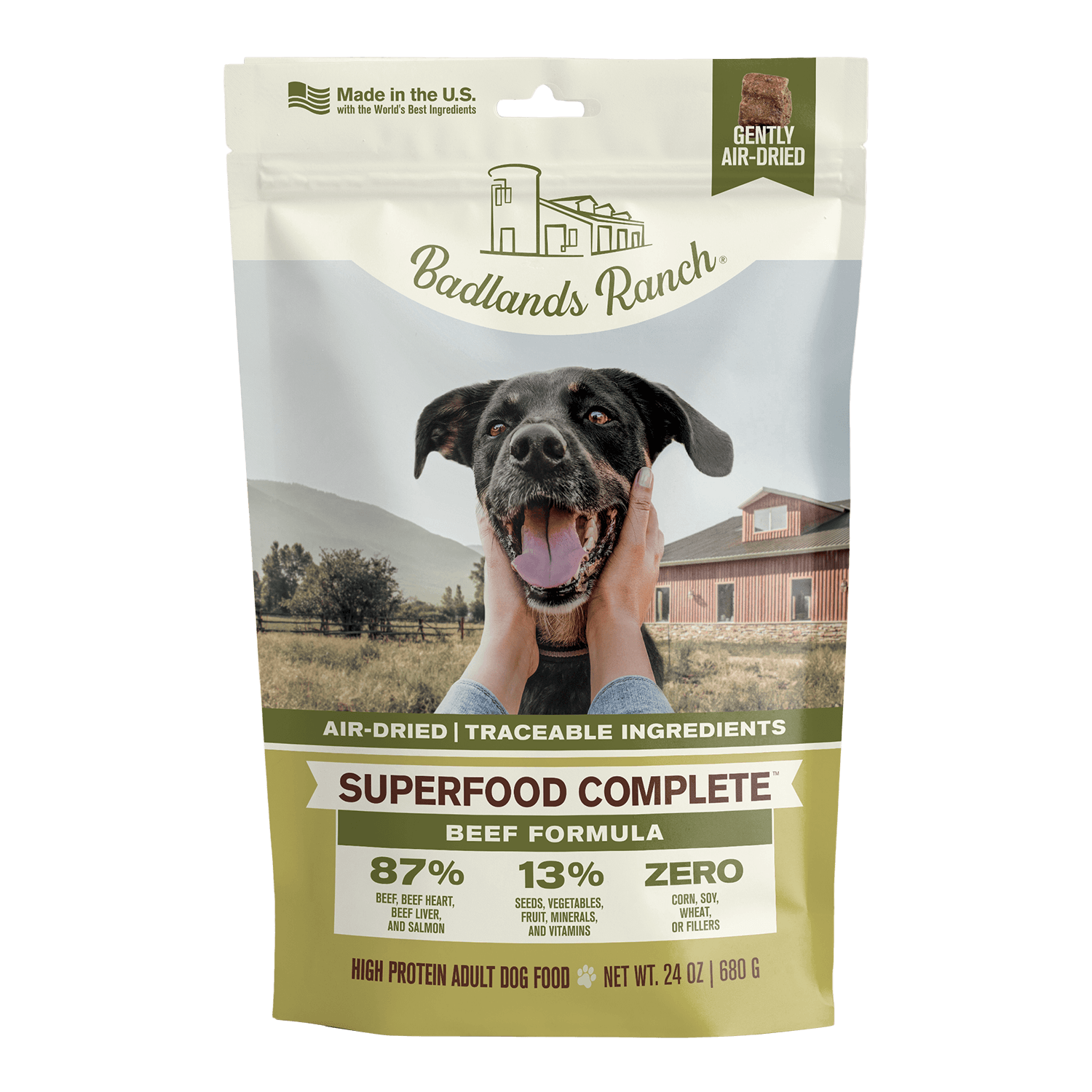
If you’re exploring premium options, the best air-dried dog food focuses on ingredient transparency, responsible sourcing, and thoughtful processing. Brands like Badlands Ranch air-dried dog food are designed to deliver nutrient-dense meals without any unnecessary extras.
Whatever food you choose, prioritizing quality ingredients and paying attention to your dog’s coat, energy, and overall health will always be the smartest choice.
*The information provided herein is intended for your general knowledge only and is not intended to be, nor is it, medical advice or a substitute for medical advice. Your dog’s results can and will vary.
Sources
1. https://www.sciencedirect.com/science/article/abs/pii/S037784010600527X