



Do Vets Recommend Badlands Ranch Dog Food?
Dog Nutrition
Home » How Many Times a Day Should You Feed Your Dog?

Most of us can list the first three ingredients in our dog’s food. We care about the quality. Yet we often let our own work schedules dictate when those meals happen.
To find out if that’s a problem, we spoke with Ambika Vaid-Sidu, DVM, veterinary nutrition consultant and advisor to Badlands Ranch, focused on digestive health and minimally processed diets for dogs. She explains why the “when” is just as important as the “what” and how a scattered schedule could be causing unnecessary stress.
Wolves in the wild might eat sporadically, but our domesticated dogs have evolved different needs. Dr. Vaid-Sidu explains that because modern dogs have higher metabolic demands, they do better physiologically with two meals a day.
Splitting their daily nutrition into morning and evening meals offers three key health benefits:
Some healthy young adults can tolerate eating just once a day. However, Dr. Vaid-Sidu warns that for many dogs, that long gap between meals can lead to serious adverse effects.
Dogs develop a circadian rhythm trained by food. Dr. Vaid-Sidu calls this the “stomach clock.”
When you stick to a schedule, Ghrelin (the hunger hormone) spikes right before the expected mealtime. This signals the stomach to ramp up gastric acids, so the body is physically prepped to digest dinner.
That consistency aids in nutrient absorption and keeps insulin levels stable. It also builds confidence. Knowing exactly when food is coming creates a sense of security that helps them cope with stress much better than a random schedule would.
Leaving a bowl of food out all day might seem convenient, but veterinarians generally advise against it. According to Dr. Vaid-Sidu, dogs are “meal-oriented eaters,” not true grazers.
When food is always available, a dog’s natural satiety signal never goes off.
“Their brain does not signal to them that they are full, and this causes the insulin to stay mildly elevated throughout the day,” Dr. Vaid-Sidu explains.
This constant “topping off” is a fast track to obesity because you can’t measure exactly how much they’re eating. A schedule also acts as a health check. If a dog suddenly leaves a full bowl behind, you know immediately that something is wrong.
“Dogs are creatures of habit, and a routine helps them develop confidence,” says Dr. Vaid-Sidu.
When a dog is completely dependent on you for food but doesn’t know when it’s coming, they can develop deep insecurity. Dr. Vaid-Sidu notes that this anxiety often looks like:
If you have an erratic work schedule or a long commute, hitting that exact feeding time every day is tough. Dr. Vaid-Sidu notes that automatic feeders are “great for making mealtime consistent” when life gets hectic.
However, she advises using them correctly. Automatic feeders work best if used to give full meals two times a day, rather than dispensing small snacks throughout the day. Frequent small meals can backfire, causing dogs to guard the feeder obsessively while waiting for the next drop.
Using a reliable tool like a Penthouse Paws Automatic Feeder ensures your dog’s routine stays locked in. It keeps their digestion stable and their anxiety low—even if you’re stuck in traffic.
This article was produced in partnership with Penthouse Paws. We teamed up with Dr. Ambika Vaid-Sidu to understand the science of feeding schedules and how tools like the Penthouse Paws Automatic Feeder can help.
Because it’s gently processed, air-dried food retains more vitamins, minerals, and natural enzymes that help support your dog’s overall well-being.
Disclosure: The Dr Marty’s Pets team creates these articles as a way to provide you with the latest information on health and nutrition. Unfortunately, we cannot make specific product recommendations for our website visitors, such as “Dr Marty’s Nature’s Feast” or “Feline Prime” Please consult with your healthcare provider to determine the best products for you.

Over 2,000+ 5-Star Customer Reviews!
Find out why people love Superfood Complete!
Learn MoreDo Vets Recommend Badlands Ranch Dog Food?

Is Beef Liver Good for Dogs?

How Many Times a Day Should You Feed Your Dog

The Ultimate Guide to Air-Dried Dog Food
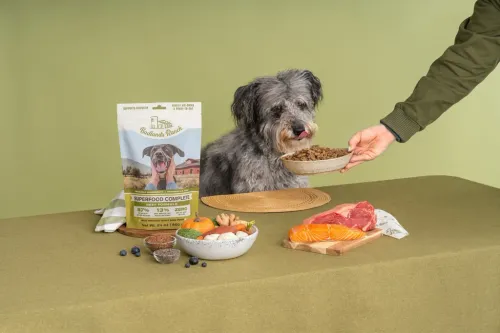
How To Transition Your Dog To Superfood Complete
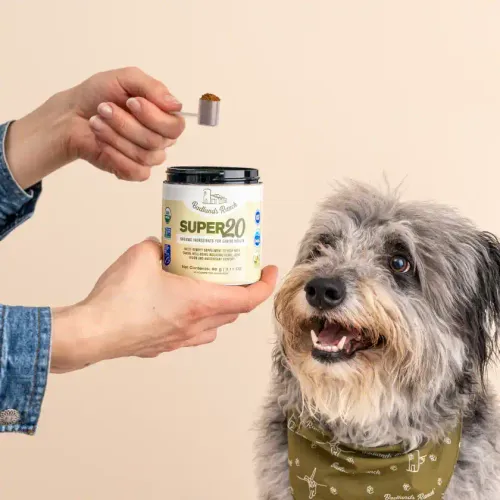
How To Add Super20 to Your Dog's Routine
Related Articles
Do Vets Recommend Badlands Ranch Dog Food?
Is Beef Liver Good for Dogs?
How Many Times a Day Should You Feed Your Dog
The Ultimate Guide to Air-Dried Dog Food
How To Transition Your Dog To Superfood Complete
How To Add Super20 to Your Dog's Routine
Pumpkin Ice Cream – For Pups!

Celebrate Women’s Day with Katherine Heigl

Furever Love: Adoption “love stories” from the Jason Heigl Foundation
Loading...