





Home » Pet Resources » Dog Nutrition
Is Badlands Ranch Superfood Complete Good for Dogs With Sensitive Stomachs?
By Dr. Ambika Vaid-Sidhu, DVM, CVA
Badlands Ranch veterinary advisor
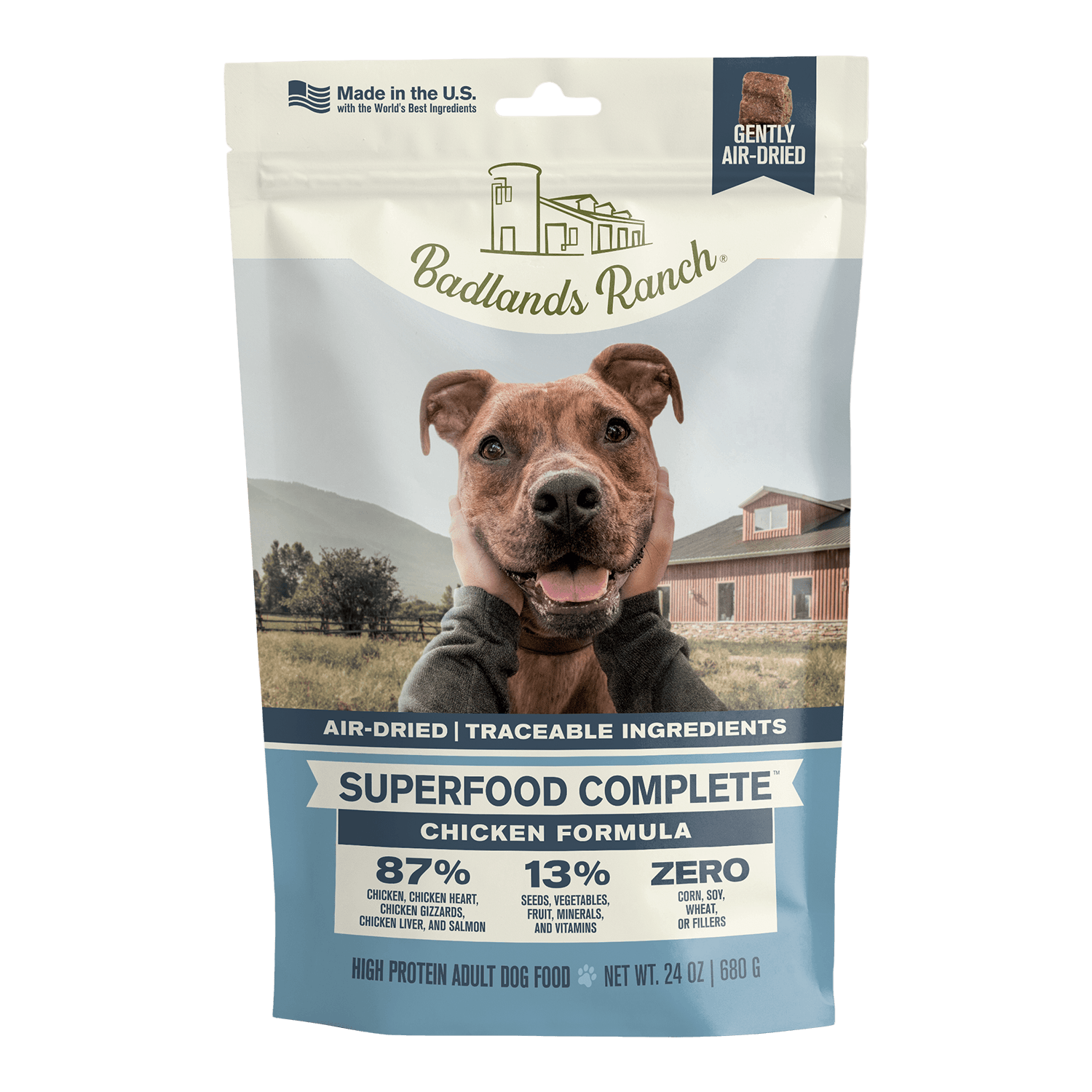
Badlands Ranch Superfood Complete is an air-dried, complete and balanced food for adult maintenance. Whether a recipe fits an adult dog with a sensitive stomach depends on that dog's ingredient tolerances and dietary needs. Compare the full ingredient list and feeding guidance with your veterinarian before switching.
For most healthy adult dogs, it's an air-dried food I recommend. The format matters less than the formulation, the portion, and the fit for your individual dog. Here's how I would work through the questions that matter before changing what's in the bowl.
Which Badlands Ranch recipe is best for a sensitive stomach?
The best fit depends on which ingredients your dog tolerates and any dietary needs your veterinarian has identified. All five Superfood Complete recipes contain multiple animal protein sources, including salmon. Check the whole ingredient list, even when the recipe name sounds like a single protein.
This table lists the meat, organ, and fish ingredients on each label, along with its minimum crude fat guarantee.
| Superfood Complete recipe | Meat, organ, and fish ingredients | Crude fat minimum (as fed) |
|---|---|---|
| Beef | Beef, beef heart, beef liver, salmon | 30% |
| Chicken | Chicken, chicken heart, chicken gizzard, chicken liver, salmon | 28% |
| Wild Fish & Turkey | Whitefish, turkey, turkey liver, turkey gizzard, turkey heart, salmon | 27% |
| Lamb & Venison | Lamb, venison, lamb liver, salmon | 33% |
| Bison & Beef | Bison, beef, beef heart, beef liver, beef tripe, salmon | 34% |
Label information checked November 5, 2026. These are guaranteed minimums, not exact fat contents or maximums. They do not establish suitability for a prescribed low-fat diet.
For example, switching from Beef to Chicken still leaves salmon in your dog's bowl. If your veterinarian has told you to avoid salmon, none of these five recipes fits that instruction.
Use the links above to read the full ingredient lists. Check the label on your bag before feeding, and bring it to your veterinarian if you're unsure which recipe fits your dog.
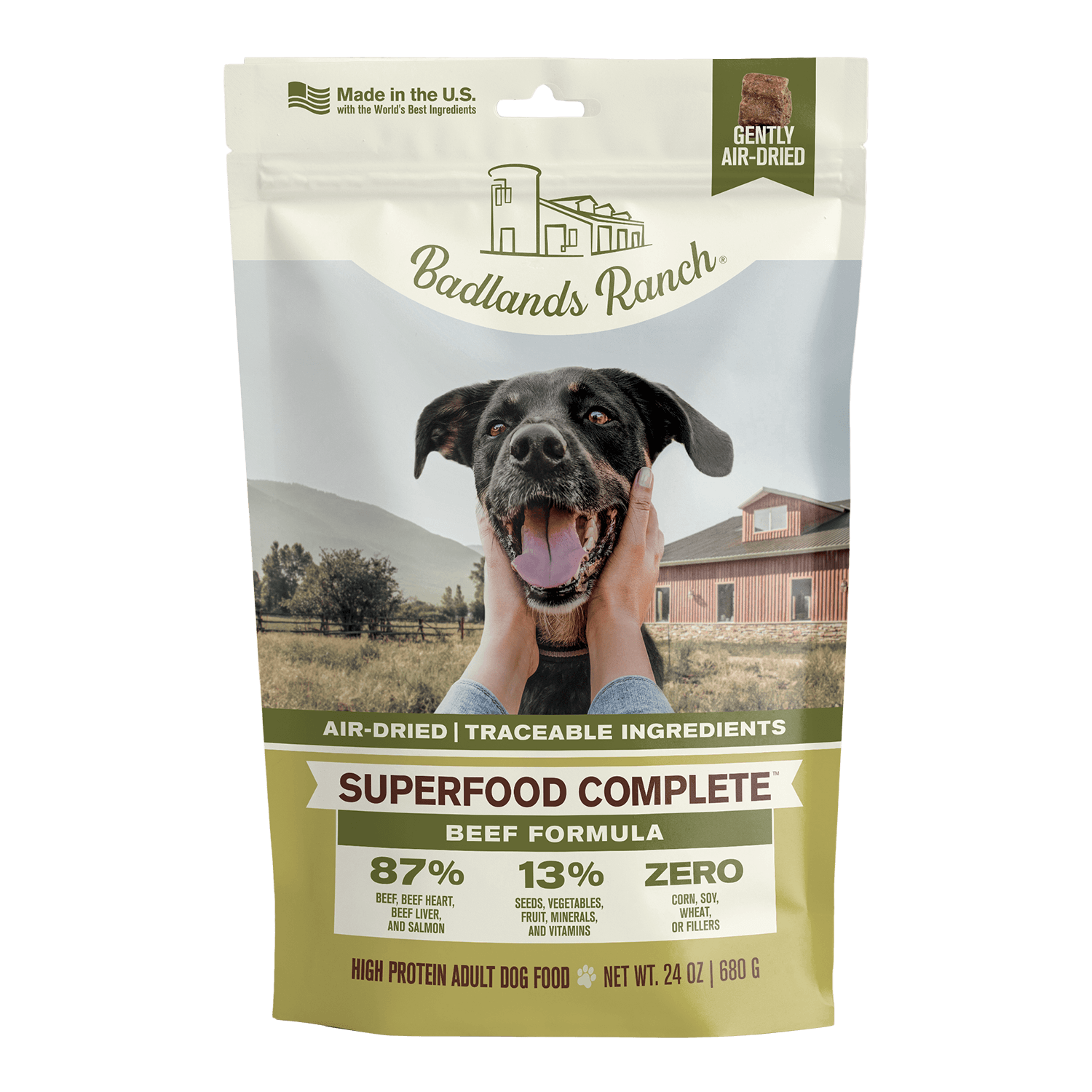
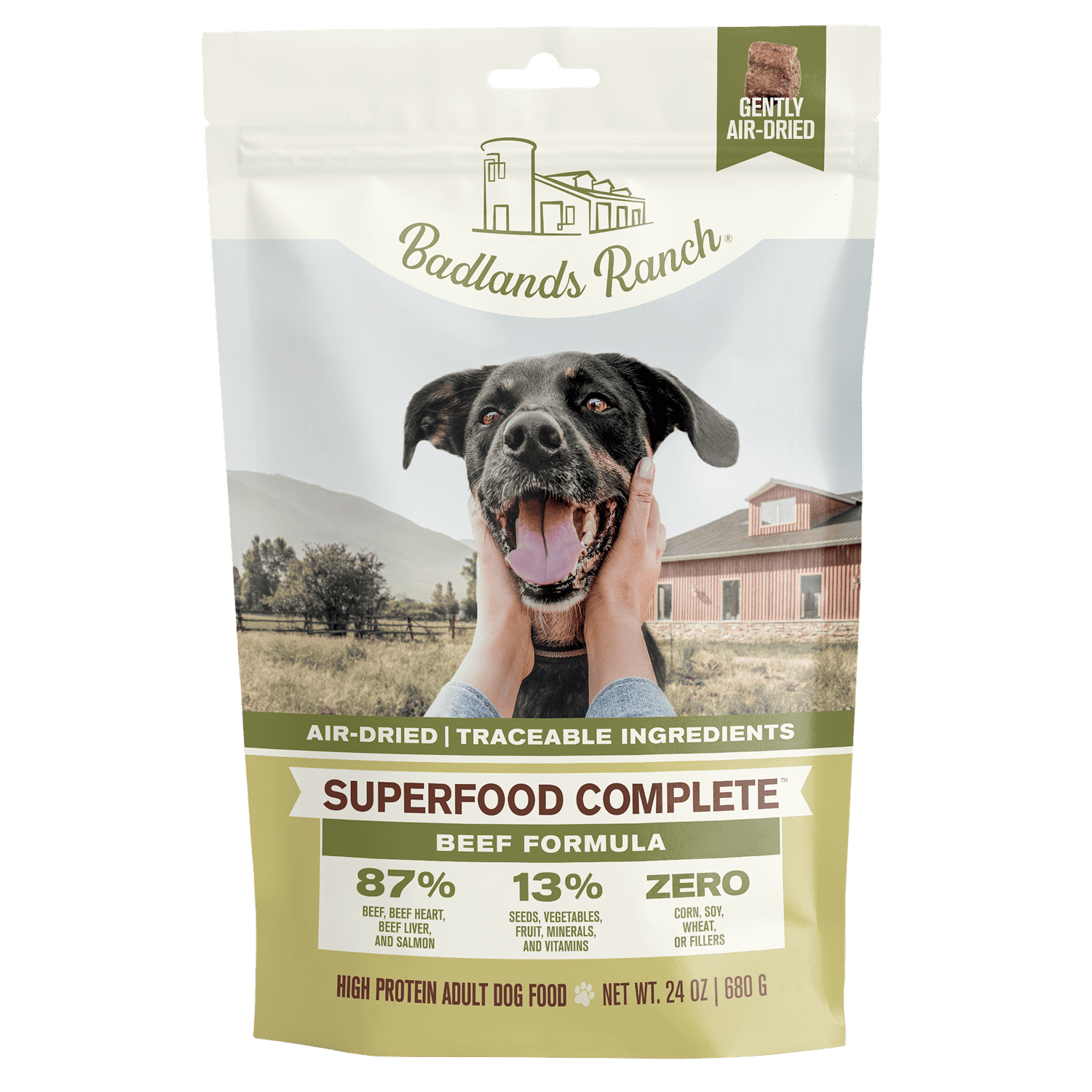
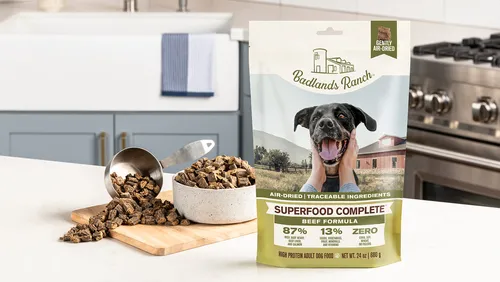
Badlands Ranch Superfood Complete product lineup.
Is air-dried food easier to digest than kibble?
Air-drying alone doesn't tell you how well your dog will digest or tolerate a food. I would compare the full recipes and your dog's needs before choosing between food formats.
Badlands Ranch prepares Superfood Complete using an air-drying low-and-slow cooking method. It combines named meats and organ meats with vegetables, fruit, seeds, vitamins, and minerals. You can scoop and serve it without thawing or rehydrating. See the Superfood Complete Beef recipe.
If your dog needs a prescribed diet, discuss any change with your veterinarian first.
Is Superfood Complete a low-fat dog food?
The Superfood Complete labels list crude-fat minimums from 27% to 34% as fed. Those numbers do not establish that a recipe meets a veterinarian's prescribed fat limit. If your dog needs a fat-restricted diet, ask your veterinarian to assess the recipe before switching.
A minimum is the amount guaranteed to be present at least. It isn't the food's exact fat content or a maximum. These percentages describe the food as sold, and foods with different moisture levels need an appropriate comparison. The FDA's pet food nutrition guide explains why moisture matters.
I wouldn't choose Wild Fish & Turkey for a prescribed low-fat diet simply because it has the lowest minimum in this table. Your veterinarian may need additional nutrient information to make that decision.
Will Badlands Ranch help firm up my dog's poop?
The ingredient list alone can't tell us whether Superfood Complete will firm up your dog's stools. It contains pumpkin and sweet potato, but your dog's response depends on the complete recipe and what's causing the loose stool.
All five recipes also include flaxseed, carrots, broccoli, chia seeds, and blueberry.
A sudden food change, stress, and intestinal parasites can all cause loose stool. If it keeps returning, talk with your veterinarian before adding another food, topper, or supplement. Cornell explains common causes of diarrhea in dogs.
Can my dog eat Superfood Complete if they have food allergies?
That depends on the ingredient your dog needs to avoid and your veterinarian's diet instructions. All five current Superfood Complete recipes contain multiple animal proteins, including salmon. I would not substitute one for a prescribed elimination diet without discussing it with your veterinarian.
If you suspect a food allergy, your veterinarian can help identify the cause and may recommend a controlled diet trial. Changing the protein name on the bag is not the same as following that trial. A grain-free label also doesn't establish that a food fits a particular allergy. NC State Veterinary Hospital explains how elimination diets help diagnose food allergies.
Bring a list of everything your dog eats, including meals, treats, toppers, and supplements. That history helps your veterinarian understand what your dog has been exposed to.
Can I feed Superfood Complete every day, or is it just a topper?
Superfood Complete is formulated as a complete and balanced food for adult maintenance. It can be fed as your adult dog's daily food when it fits their dietary needs and you follow the recipe's feeding guide.
Each of the five current labels states that the recipe is formulated to meet the nutritional levels established by the AAFCO Dog Food Nutrient Profiles for adult maintenance. These labels specify adult maintenance, not puppy growth or all life stages. The FDA's complete and balanced explanation describes what that statement means.
For a dog with digestive sensitivities or a prescribed diet, confirm the recipe and feeding amount with your veterinarian first.
How do I switch to Badlands Ranch without upsetting my dog's stomach?
Introduce Superfood Complete gradually. A slow transition gives you time to watch your dog's appetite and stool, although it can't guarantee that every dog will tolerate the new food.
The Badlands Ranch transition guide gives this schedule.
| Days | Superfood Complete | Previous food |
|---|---|---|
| 1 to 2 | 10% | 90% |
| 3 to 4 | 25% | 75% |
| 5 to 6 | 50% | 50% |
| 7 to 8 | 75% | 25% |
| 9 onward | 100% | 0% |
Your veterinarian may recommend a slower transition, especially if your dog has had trouble with food changes before. Use the feeding guide for the recipe you've chosen rather than your old kibble scoop, and keep clean, fresh water available.
My dog has loose stool after switching food. What should I do?
Contact your veterinarian for guidance before continuing the switch. Changing food too quickly can cause diarrhea, but timing alone doesn't tell you the cause. Cornell's guidance on diarrhea and food changes explains why a gradual transition matters.
Note when the loose stool started, how much new food you've introduced, and any changes in treats or supplements. Share those details with your veterinarian. Seek prompt care if your dog also stops eating, becomes lethargic, or has black or tarry stool.
My dog keeps throwing up. Should I change their food?
Talk with your veterinarian before trying another food. Repeated vomiting, including recurring morning vomiting, deserves an evaluation. A food change alone won't tell you why it is happening. Cornell recommends veterinary evaluation for chronic diarrhea or stomach upset.
Seek prompt care if your dog stops eating, becomes lethargic, or has black or tarry stool, particularly with vomiting or diarrhea. Cornell's diarrhea guidance covers these warning signs.
You know your dog's everyday habits. Sharing what has changed can help your veterinarian decide what to check and what belongs in the bowl next.
All pets are unique. Your pet's results can and will vary. When in doubt, consult your veterinarian.
This article provides general information and does not replace veterinary advice for your dog.
About the author
Dr. Ambika Vaid-Sidhu, DVM, CVA is an integrative veterinarian and Badlands Ranch veterinary advisor. Her clinical interests include nutrition.
Discover Badlands Ranch Products

Over 2,000+ 5-Star Customer Reviews!
Superfood Complete
Reviews
Find out why people love Superfood Complete!
Learn MoreSuperfood Complete Coupons
Learn MoreDo Vets Recommend Badlands Ranch Dog Food?
Dog NutritionIs Air-Dried Dog Food Good for Sensitive Stomachs?
Dog NutritionDog WellnessIs Beef Liver Good for Dogs?
Dog NutritionIs Air-Dried Dog Food Safe?
Dog NutritionHow Many Times a Day Should You Feed Your Dog
Dog Nutrition



Related Articles
Do Vets Recommend Badlands Ranch Dog Food?
Dog NutritionIs Air-Dried Dog Food Good for Sensitive Stomachs?
Dog NutritionDog WellnessIs Beef Liver Good for Dogs?
Dog NutritionIs Air-Dried Dog Food Safe?
Dog NutritionHow Many Times a Day Should You Feed Your Dog
Dog NutritionThe Ultimate Guide to Air-Dried Dog Food
Dog NutritionHow To Transition Your Dog To Superfood Complete
Dog NutritionDog WellnessHow To Add Super20 to Your Dog's Routine
Dog NutritionDog Wellness



Loading...